
Mars: Unveiling the Red Planet’s Enduring Mysteries and Humanity’s Future Frontier

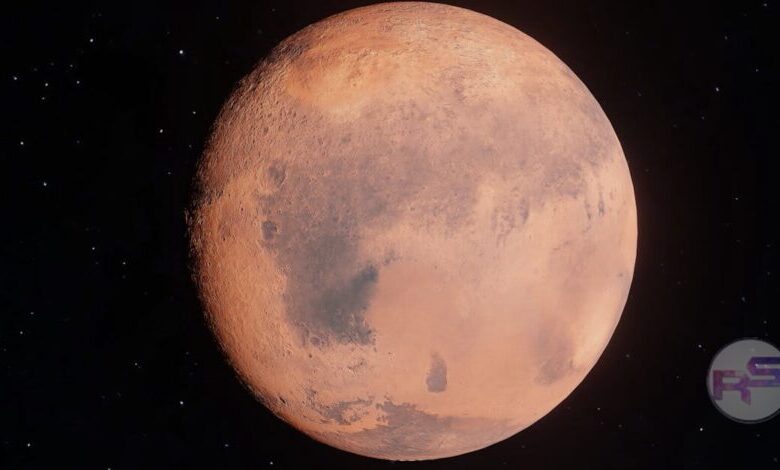
Mars, often dubbed the Red Planet, has captivated humanity for centuries. Its distinctive crimson hue, visible even from Earth, has fueled imaginations and inspired countless stories of alien life and future endeavors. More than just a distant speck of light, Mars stands as a prime target in our quest for understanding planetary evolution and, more significantly, as a potential second home for humankind.
The allure of Mars extends beyond its visual appeal. It represents a tangible next step in space exploration, a planet within our reach that holds clues to fundamental questions about life beyond Earth. From ancient civilizations observing its celestial dance to modern probes meticulously mapping its surface, our fascination with Mars has only deepened with each new discovery.
The Red Planet’s Profile: A Glimpse into a Distant World
Mars is the fourth planet from the Sun, a terrestrial world with a thin atmosphere composed primarily of carbon dioxide. Its striking red color comes from iron minerals in its soil that rust, or oxidize, over time. While considerably smaller than Earth, Mars exhibits a diverse landscape featuring vast plains, towering volcanoes like Olympus Mons the largest in the solar system and deep canyons such as Valles Marineris.
Despite its arid and seemingly barren appearance today, evidence suggests Mars once harbored significant amounts of liquid water on its surface. Polar ice caps, composed of both water ice and frozen carbon dioxide, offer a persistent reminder of this watery past and serve as crucial reservoirs for future missions. Understanding these geological and atmospheric features is fundamental to assessing Mars’s potential for sustaining life.
A Legacy of Exploration: Unraveling Martian Secrets
Our knowledge of Mars has been painstakingly built through decades of robotic exploration. Beginning with the Mariner flybys in the 1960s, a fleet of orbiters, landers, and rovers has been dispatched to the Red Planet. Missions like the Viking landers in the 1970s provided the first detailed images from the Martian surface, while subsequent rovers such as Spirit, Opportunity, and Curiosity have offered unprecedented insights into its geology and environmental history.
Most recently, the Perseverance rover, part of NASA’s Mars 2020 mission, continues to explore the Jezero Crater, actively collecting samples for potential return to Earth. These missions are not merely scientific endeavors; they are the trailblazers, gathering vital data that will inform and enable humanity’s eventual journey to Mars.
Recent Discoveries: Hints of Past Habitability and Future Resources
Recent scientific investigations have significantly advanced our understanding of Mars. According to available information, compelling evidence points to a warmer, wetter ancient Mars, with clear signs of ancient riverbeds, lakebeds, and mineral deposits formed in the presence of water. This historical presence of liquid water is a key factor in assessing the planet’s past habitability and the potential for ancient microbial life.


Current updates suggest the presence of substantial subsurface water ice, particularly at higher latitudes. This discovery is pivotal, as water ice represents a crucial resource for future human missions to Mars, providing not only drinking water but also a source of oxygen for breathing and hydrogen for rocket fuel through a process called In-Situ Resource Utilization (ISRU).
The Grand Challenge: Preparing Humans for the Red Planet
While robotic missions have paved the way, sending humans to Mars presents an entirely new set of challenges. One of the foremost concerns is the intense radiation environment. Unlike Earth, Mars lacks a substantial magnetic field to deflect harmful cosmic rays and solar particles, necessitating robust shielding for both spacecraft and habitats. The thin Martian atmosphere offers little protection, further exposing astronauts to this hazard.
Another significant hurdle is the long duration of the journey and stay, which can lead to severe physiological and psychological effects. As per recent updates, studies on muscle loss and bone density in microgravity suggest that humans will face considerable health challenges on Mars due to its lower gravity. Furthermore, the immense distance between Earth and Mars creates communication delays, exacerbating feelings of isolation and requiring high levels of astronaut autonomy.
Innovations Paving the Way: Overcoming Martian Obstacles
Despite these daunting challenges, scientific and technological advancements are steadily making human missions to Mars a more tangible reality. Engineers are developing advanced propulsion systems to shorten travel times and reduce radiation exposure. Life support systems are becoming more efficient, designed to recycle air, water, and waste with minimal resupply from Earth.
Innovations in habitat construction, such as 3D printing with Martian regolith, aim to provide protective shelters that can be built on-site. Furthermore, extensive research is being conducted on astronaut health, nutrition, and psychological well-being to ensure crew resilience during extended stays on Mars. The collective expertise of global space agencies and private companies is converging on solutions for these complex problems.
Vision for a Martian Future: Humanity’s Next Frontier
The long-term vision for Mars extends beyond mere exploration to potential colonization. While terraforming Mars to make it more Earth-like remains a distant and highly theoretical concept, establishing permanent human outposts is a goal being actively pursued. These initial settlements would serve as scientific research stations, resource extraction sites, and ultimately, stepping stones towards a multi-planetary future.
Many space agencies and private enterprises are developing ambitious roadmaps for human missions to Mars, with target dates for crewed landings within the next two decades. These endeavors represent humanity’s inherent drive to explore, to push boundaries, and to secure the future of our species by expanding our presence beyond Earth.
Conclusion
Mars continues to beckon, a frontier of immense scientific interest and profound existential possibility. Every rover deployed, every piece of data transmitted, brings us closer to understanding its deep past and shaping its potential future. The journey to Mars is a testament to human ingenuity and perseverance, promising not only unprecedented scientific discoveries but also the inspiring prospect of humanity becoming a true multi-planetary species. Our future among the stars may very well begin on the Red Planet.
Tags : Mars exploration, Red Planet, space travel, future humanity, planetary science, space missions, human colonization, astrobiology, space technology, cosmic discoveries


