
Why Not Iron or Copper? The Secret Behind Gold and Silver’s Monetary Rule
From Barter to Bullion: The 5,000-Year History of Gold and Silver Money


The Metallurgical and Economic Hegemony of Gold and Silver: A Multi-Disciplinary Inquiry into Historical Currency Standards
The historical trajectory of human commerce is defined by a persistent search for a stable, universal, and incorruptible medium of exchange. The transition from primitive barter systems—predicated on the “double coincidence of wants”—to the adoption of precious metals represents one of the most significant cognitive and structural revolutions in civilization. While early societies experimented with a diverse array of commodity currencies, ranging from salt and grain to cowrie shells and livestock, gold and silver eventually emerged as the undisputed sovereigns of the monetary world. This report investigates the multi-faceted reasons for this dominance, analyzing the unique convergence of chemical stability, geological scarcity, and economic utility that rendered these metals the ideal foundations for global trade and sovereign power.
The Evolutionary Transition from Barter to Metallic Specie
The elementary forms of trade were characterized by the direct exchange of goods and services, a system that functioned adequately in small, primitive economies where needs were limited and equivalence in value was negotiated on a case-by-case basis. However, as societies advanced and trade networks expanded, the limitations of bartering became an impediment to economic growth. The lack of a common denominator of value made complex transactions difficult, as a merchant with grain might not find a seller who simultaneously possessed the desired clothing and a requirement for grain.
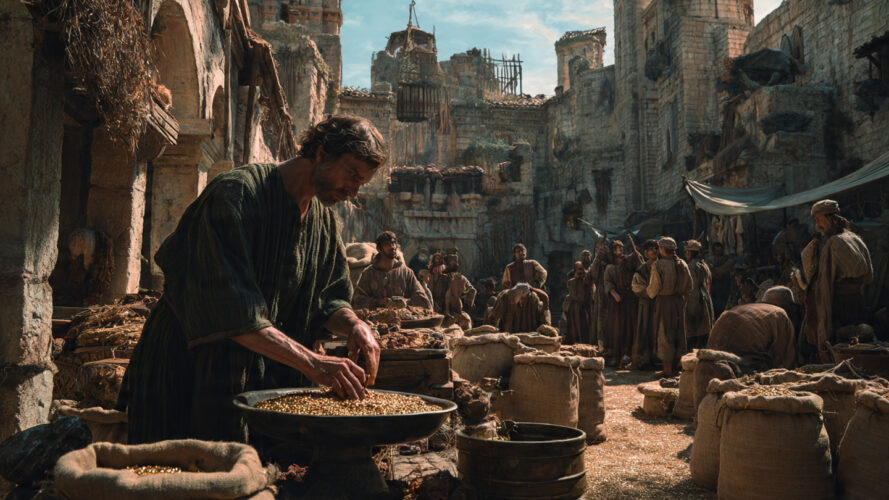
To overcome these friction points, humanity developed “commodity money.” This involved using widely valued items—such as animal skins, salt, weapons, and shells—as intermediaries. Salt, for instance, was essential for preservation, while shells like the cowrie were valued for their beauty and durability. In Western Africa and the Pacific, shell-mediated exchange systems persisted for centuries, with shells sometimes gaining unique values based on the social relationships between buyers and sellers. Yet, commodity money suffered from inherent defects: salt was susceptible to moisture, grain would rot, and animal skins varied significantly in quality and size.
The shift toward metallic currency was driven by the realization that metals offered superior advantages in terms of “treasuring,” divisibility, and transportability. Initially, metals were exchanged in their natural state or as unrefined ingots, but the need for standardization led to the development of “money in the form of objects”. Early Asian and Greek societies produced replicas of metal tools—knives, keys, and animal skins—to serve as currency. By the 7th century BCE, the first coins resembling modern denominations appeared in Lydia, featuring fixed weights and official seals that guaranteed their value, marking the definitive end of the primitive barter era.
The Chemical and Atomic Imperatives of Monetary Selection
The selection of gold and silver as the primary mediums of exchange was not a historical accident but a consequence of their unique positions on the periodic table. To serve as a reliable store of value, a substance must be chemically stable enough to resist the passage of time. When early civilizations evaluated the available elements, most were disqualified based on their physical and chemical properties.
Noble Stability and Resistance to Atmospheric Corrosion
Gold (Au), with an atomic number of 79, is classified as a noble metal due to its extreme chemical inertness. It does not react with oxygen, meaning it cannot rust or tarnish, and it remains insoluble in almost all simple acids. This property of “immunity to corrosion” ensured that a gold coin minted two thousand years ago would retain its radiant yellow hue and its precise mass when unearthed today. This permanence is foundational to the concept of “intrinsic value,” where the material itself contains the wealth it represents, independent of political decree.


Silver (Ag), with an atomic number of 47, is slightly more reactive than gold but remains significantly more stable than base metals like iron or copper. While silver reacts with atmospheric sulfur to form silver sulfide (Ag_2S), the resulting tarnish is a superficial film that does not compromise the structural integrity of the coin. This tarnish was historically viewed not as a defect but as a diagnostic feature that helped distinguish genuine silver from counterfeits.
| Elemental Property | Gold (Au) | Silver (Ag) | Copper (Cu) | Iron (Fe) |
|---|---|---|---|---|
| Atomic Number | 79 | 47 | 29 | 26 |
| Chemical Group | 11 (Transition) | 11 (Transition) | 11 (Transition) | 8 (Transition) |
| Corrosion Resistance | Excellent | High (Tarnishes) | Moderate | Low (Oxidizes) |
| Melting Point (^\circ C) | 1,064.18 | 961.78 | 1,084.62 | 1,538 |
| Specific Gravity | 19.32 | 10.49 | 8.96 | 7.87 |
| Malleability | Highest | Very High | High | Low (Brittle) |
The table above illustrates the metallurgical superiority of Group 11 metals. While copper shares the same group and exhibits many similar properties, its high abundance in nature reduced its “value density,” eventually relegating it to minor currency roles. Iron, despite being a transition metal, was disqualified as a primary currency due to its rapid oxidation and its high melting point, which made it difficult for ancient smiths to refine and strike into uniform coins.
The Role of Relativistic Effects and Luster
The aesthetic appeal of gold and silver played a significant role in their adoption as currency, often linked to early religious and astronomical beliefs. Babylonian priests, for example, associated gold with the sun and silver with the moon, imbuing these metals with a perceived magical or divine power. Scientifically, gold’s unique yellow color arises from relativistic effects within its electrons, which alter the way the metal absorbs and reflects light. Silver possesses the highest reflectivity of any metal, reflecting almost all visible wavelengths of light to produce its characteristic bright white luster. This “cognizability”—the ease with which the metal can be recognized and verified by sight—was a critical security feature in illiterate societies.
The Economic Pillars of Precious Metal Currency
Beyond their chemical traits, gold and silver possess five economic attributes that are essential for any medium of exchange: durability, portability, divisibility, homogeneity, and scarcity.
Durability and Homogeneity
A currency must be “indestructible” to function as a store of value over time. Unlike organic commodities, metals do not rot, evaporate, or dissolve. Furthermore, precious metals are approximately homogeneous; every ounce of pure 24-karat gold is identical to every other ounce, regardless of its origin. This allows for the standardization of value based solely on weight, a principle that underpinned the first coinage systems.
Divisibility and Reversibility
One of the greatest advantages of gold and silver is their ability to be divided into smaller units without losing their aggregate value. A gold bar can be cut into smaller pieces, or “hacksilver” can be clipped from an ingot to facilitate a small transaction. Crucially, these pieces can be melted back together in a crucible with minimal loss of material, ensuring that the utility of the metal remains constant regardless of its physical form.
Value Density and Portability
“Value density” refers to the amount of wealth that can be contained within a specific volume or weight of material. Gold’s extreme rarity results in an exceptionally high value density, which lowers the costs of storage and transportation. A merchant carrying a single gold coin could possess the same purchasing power as someone carrying a massive bag of copper coins or several head of cattle. This portability was vital for the expansion of international trade, allowing wealth to be moved across borders and oceans with ease.
Scarcity and the Stock-to-Flow Ratio
The fundamental value of gold and silver is derived from their geological scarcity. Gold occurs in the Earth’s crust at a concentration of approximately 0.004 parts per million, while silver is roughly twenty times more abundant at 0.08 parts per million. This rarity means that the total supply grows slowly, preventing the sudden “inflation” that would occur if the metal could be easily produced or found.
The “stock-to-flow” ratio of gold is uniquely high; because the metal is virtually indestructible, almost all the gold ever mined in human history—approximately 205,000 metric tons—remains in existence today. This large existing stock, combined with a difficult and expensive extraction process for new supply, creates a natural limit on the expansion of the money supply, providing a stability that paper or digital currencies cannot inherently guarantee.
Civilizational Deployment: The Near East and Europe
The implementation of gold and silver as currency followed distinct patterns across the major centers of ancient power, reflecting local resources and trade requirements.
The Lydian Innovation and Greek Refinement
The world’s first officially minted currency appeared in Lydia (modern-day Turkey) around 640–600 BCE. These coins, known as “staters,” were made of electrum, a naturally occurring alloy of gold and silver found in the Pactolus River. The Lydian kings stamped these coins with official symbols, such as a lion’s head, to guarantee their weight and purity. This standardization revolutionized trade by eliminating the need for merchants to weigh metal for every transaction.
Following the Lydian model, Greek city-states adopted silver as their primary monetary standard. The mines of Laurion near Athens provided a massive influx of silver that fueled Athenian power and culture, allowing for the minting of the famous “Owl” tetradrachm, which became a dominant trade currency throughout the Mediterranean.
Read More : Why Gold and Silver Became the World’s First Money: A Simple Guide
The Roman Tri-Metallic System
The Roman Republic and later the Empire developed a sophisticated monetary hierarchy that utilized gold, silver, and copper. The Aureus (gold) served for high-value military and state expenditures, while the Denarius (silver) was the workhorse of the domestic economy, used for paying wages and conducting retail trade.
The Romans were pioneers in large-scale mining, developing techniques like “hydraulic hushing” (ground-sluicing) to wash away soil and expose gold and silver veins. They also utilized water wheels and underground mining to extract ore, which was then “roasted” to separate the metal from the surrounding rock. The ability of the Roman state to control these mines was central to its longevity; when the mines in Spain and elsewhere were exhausted or lost to invaders, the resulting debasement of the currency (reducing the silver content of the Denarius) contributed significantly to the Empire’s eventual economic collapse.
The Medieval European Recovery
Following the fall of Rome, Europe experienced a period of monetary fragmentation where gold coins virtually disappeared from circulation, and trade reverted to low-purity silver pennies. As commerce revived during the Crusades and the rise of the Mediterranean city-states, the need for high-value currency returned. In the 13th century, gold coins were reintroduced to Europe, starting with the Florin in Florence and the Ducat in Venice. These gold coins became international standards of trust, facilitating the expansive trade of the Renaissance.
In Britain, the Norman conquerors of 1066 introduced the “pound,” which originally referred to a literal pound of silver. In the 14th century, England added gold to its system with the Noble coin, eventually leading to the creation of the gold Sovereign under Henry VII in 1489, which became a global symbol of reliability and quality.
The Numismatic Journey of Ancient India
India’s monetary history is characterized by a transition from rudimentary exchange to some of the most artistically and metallurgically advanced coins of the ancient world.

The Era of Punch-Marked Coins (6th Century BCE)
The earliest documented coinage in India appeared during the Mahajanapada period. These were “Punch-Marked” coins, predominantly made of silver. They were manufactured by beating silver into sheets, cutting them into irregular shapes of a standard weight, and then punching individual symbols onto the surface. These symbols—ranging from suns and trees to animal motifs like elephants and bulls—likely represented the authority of merchant guilds or local states like Magadha, Kosala, and Kashi.
During the Mauryan period (322–185 BCE), these coins became standardized across the empire. Mauryan punch-marked coins typically featured five symbols on the obverse and were used for administrative tasks such as collecting tribute and paying the massive Mauryan army.
Foreign Influence and the Rise of Gold
The post-Mauryan period saw an influx of foreign cultural and monetary influences. The Indo-Greeks introduced die-struck coins featuring realistic portraits of rulers and bilingual legends in Greek and Kharoshti scripts. This was followed by the Kushans, who issued high-quality gold dinars depicting the king alongside a diverse pantheon of Hindu, Buddhist, and Zoroastrian deities. These Kushan coins reflect the extensive trade networks that linked India to the Silk Road and the Roman Empire.
The Gupta Dynasty: The Golden Age of Coinage
The Gupta period (4th–6th centuries CE) is regarded as the “Golden Age of Indian Coinage”. Gupta emperors minted an unprecedented quantity of gold coins, a phenomenon so significant that contemporary poets described it as a “Rain of Gold”. These coins were masterpieces of design, featuring elegant Sanskrit inscriptions and sophisticated iconography.
| Gupta Coin Type | Ruler | Key Iconography |
|---|---|---|
| Archer Type | Samudragupta / Chandragupta II | King holding bow/arrow; most common type |
| Lyrist Type | Samudragupta | King seated on a couch playing a lute/veena |
| Asvamedha Type | Samudragupta | Commemorating the horse sacrifice ritual |
| Lion Slayer Type | Chandragupta II | King slaying a lion; symbol of valor |
| Tiger Slayer Type | Kumaragupta I | King slaying a tiger; with Brahmi legends |
| Peacock Type | Kumaragupta I | King feeding grapes to a peacock |
The Gupta dinars maintained high metallurgical purity and standardized weights, facilitating a thriving economy and asserting the political sovereignty of the dynasty across the subcontinent. However, as the empire began to wane under Skandagupta, the gold content and artistic quality of the coins began to deteriorate, reflecting the increasing political and economic tensions of the era.
The Evolution of Currency in Imperial China
China’s monetary evolution is unique because it developed largely in isolation from Western metallic standards for much of its early history.
Tool-Shaped Money and the Qin Standardization
In the Spring and Autumn and Warring States periods, Chinese states used bronze currency shaped like agricultural tools. These included “Spade Money” (bu bi), which featured a hollow socket for a handle, and “Knife Money” (dao bi) from the northern regions. Different types of knife money, such as the large “Qi Knives” and the long “Needle Tip Knives,” circulated regionally, with their alloy compositions often containing around 54% copper, 38% lead, and 8% tin.
When Qin Shi Huang unified China in 221 BCE, he standardized the currency by abolishing regional varieties and introducing the Banliang—a round bronze coin with a square hole in the center. The square hole allowed coins to be strung together on a cord, a practical design that persisted for over two thousand years until the fall of the Qing Dynasty in 1912.
The Role of Gold and Silver in the Celestial Empire
While copper “cash” coins were the primary currency for the masses, gold and silver served as “upper grade” currencies for state-level transactions. During the Han Dynasty, horseshoe-shaped gold ingots were minted for auspicious occasions and large-scale trade.

In the Tang and Song dynasties, gold and silver were generally not in common circulation but were used for tax payments, rewards, and international trade. The Song Dynasty introduced the world’s first paper money (Jiaozi), which was theoretically exchangeable for copper coins. However, after the collapse of various paper systems due to over-printing and inflation, China moved toward a silver standard in the Ming and Qing eras. The massive influx of silver from the Spanish New World through maritime trade made silver ingots (sycee) the predominant form of high-value currency in China.
Scientific Assaying: The Foundation of Monetary Trust
The utility of gold and silver was contingent upon the ability to verify their purity and detect debasement (the addition of cheaper base metals like copper or lead). Ancient and medieval civilizations developed three primary quantitative methods for this purpose.
The Touchstone Method (Lydian Stone)
The most common and non-destructive method was the touchstone test, used for over 2,500 years. The tester would rub the gold or silver object against a “touchstone”—a fine-grained, slightly abrasive black basalt slab—leaving a metallic streak. The color and reaction of this streak were then compared against streaks made by “touch needles” of known purity. When a drop of “touch acid” (a mixture of nitric and hydrochloric acids) was applied, it would dissolve the base metal alloys but leave the pure gold or silver, allowing a skilled operator to estimate the metal’s fineness within 1–2%.
Archimedes and the Density Method
The principle of hydrostatic weighing, discovered by the Greek mathematician Archimedes around 250 BCE, provided a mathematical way to check for debasement. Because gold is significantly denser (19.32 g/cm^3) than silver (10.5 g/cm^3) or copper (8.9 g/cm^3), an object’s density reflects its composition.
By weighing an object in air and then again while immersed in water, one can calculate its volume via the volume of water displaced. The density (\rho) is then calculated as:
Archimedes famously used this method to prove that King Hiero’s crown had been debased with silver. This method remains a highly accurate, non-destructive way to verify bullion today.
Fire Assay (Cupellation)
The most rigorous and accurate method was the fire assay, dating back to ancient Egypt and Babylon. This involved taking a small sample of the metal and melting it in a porous ceramic crucible called a “cupel” along with excess lead. Under an oxidizing flame, the lead and all other base metals would oxidize and be absorbed into the cupel, leaving behind a bead of pure gold and silver. To separate the gold from the silver, the bead was treated with nitric acid, which dissolved the silver (the “parting” stage) but left the pure gold residue to be weighed. This method, refined over millennia, remains the international standard for official hallmarking and gold refining.
The Bimetallic Standard and the Mechanics of Fixed Ratios
For most of historical time, monetary systems were not based on one metal but on bimetallism—a system where both gold and silver were legal tender at a government-fixed exchange ratio.
The Necessity of Two Metals
Bimetallism solved the problem of transaction sizes. Gold was the “large-value” currency, used for international trade and state debts, while silver was the “small-value” currency for daily life. If a country used only gold, its smallest coin would be too valuable for a loaf of bread; if it used only silver, large payments would require literal wagon-loads of metal.
Gresham’s Law and Monetary Instability
The central challenge of bimetallism was that the market prices of gold and silver fluctuated independently based on supply (new mine discoveries) and demand. When the market ratio diverged from the official mint ratio, “Gresham’s Law”—the principle that “bad money drives out good”—would take effect.
If the government set the ratio at 15:1 but the market price moved to 16:1, silver became “overvalued” at the mint. People would bring silver to the mint to turn it into coins, then use those coins to buy “undervalued” gold, which they would then hoard or export. This often caused the better (undervalued) metal to vanish from circulation, leaving the country with a de facto monometallic system.
| Historical Ratio Example | Year | Ratio (Silver:Gold) | Outcome |
|---|---|---|---|
| French Napoleonic Law | 1803 | 15.5 : 1 | Basis for global bimetallism |
| US Coinage Act | 1792 | 15 : 1 | Led to gold being exported |
| US Coinage Act | 1834 | 16 : 1 | Led to silver being hoarded |
| Persian Empire | 500 BCE | 20 : 1 | 20 Siglos to 1 Daric |
The 19th-Century Shift and the Triumph of Gold
The global monetary order was fundamentally transformed in the 1870s, marking the end of the age of silver and the beginning of the Classical Gold Standard.

The Watershed Year of 1873
Several independent events converged in 1873 to shatter the bimetallic consensus. First, the newly formed German Empire used the massive gold indemnity it received from France after the Franco-Prussian War to replace its silver thalers with a gold mark. This flooded the European market with demonetized silver. Second, the United States passed the Coinage Act of 1873, which demonetized silver and prepared the country for a gold standard.
Facing an influx of cheap silver and a loss of gold reserves, France and the Latin Monetary Union were forced to limit silver coinage, effectively breaking the bimetallic bond that had stabilized world exchange rates for decades. By the end of the 1870s, all major industrial nations had moved to the gold standard, relegating silver to a secondary “peripheral” currency status.
The Impact of the Gold Standard
The gold standard provided a mechanism for stabilizing prices and exchange rates, as the supply of money was directly tied to a nation’s gold reserves. This stability facilitated the first great era of globalization. However, it also led to severe deflation in the late 19th century, as the supply of gold could not keep pace with the rapidly expanding industrial economy. This sparked intense political conflict, particularly in the United States, where farmers and debtors—who benefited from inflation—campaigned for “Free Silver” and a return to bimetallism to increase the money supply.
The Modern Era: From Specie to Fiat Abstraction
The 20th century witnessed the final “dematerialization” of money. The constraints of the gold standard proved incompatible with the requirements of modern total war and economic management.
The Collapse of Convertibility
During the Great Depression, the gold standard was widely blamed for exacerbating the economic downturn. Governments found themselves unable to expand the money supply to combat unemployment without losing their gold reserves. Britain abandoned the gold standard in 1931, followed by the United States in 1933. In 1944, the Bretton Woods system established a new order where world currencies were pegged to the US dollar, which in turn was pegged to gold at $35 per ounce.
The final break occurred in 1971 when President Richard Nixon terminated the convertibility of the US dollar into gold. Since then, the world has operated on a “fiat” system, where money has no intrinsic value and is not backed by any physical commodity.
The Enduring Legacy of Precious Metals
Despite their demonetization, gold and silver continue to play a central role in the global economy. Central banks still hold massive gold reserves as a hedge against systemic risk and inflation. For investors, precious metals remain the “ultimate insurance” because, unlike paper assets or digital currencies, they carry no counterparty risk and cannot be inflated by government decree.
Synthesized Conclusions and Economic Insights
The exhaustive analysis of gold and silver’s role as currency reveals that their selection was dictated by an interplay of physical, chemical, and economic laws. Gold provided the “unalterable anchor” required for high-level commerce and the long-term preservation of wealth, while silver provided the “transactional flexibility” needed for the functioning of domestic markets.
The transition to fiat money represents a move toward greater economic flexibility, but it has removed the physical constraints that historically prevented the over-expansion of the money supply. The enduring value of gold and silver in the 21st century—reaching record highs during periods of geopolitical and economic instability—serves as a reminder that the properties of durability, scarcity, and intrinsic value remain the fundamental touchstones of financial security. Humanity’s five-thousand-year reliance on these metals was not merely a tradition, but a sophisticated recognition of the natural limits of value in a physical world.


